Make confident hiring decisions as your business grows
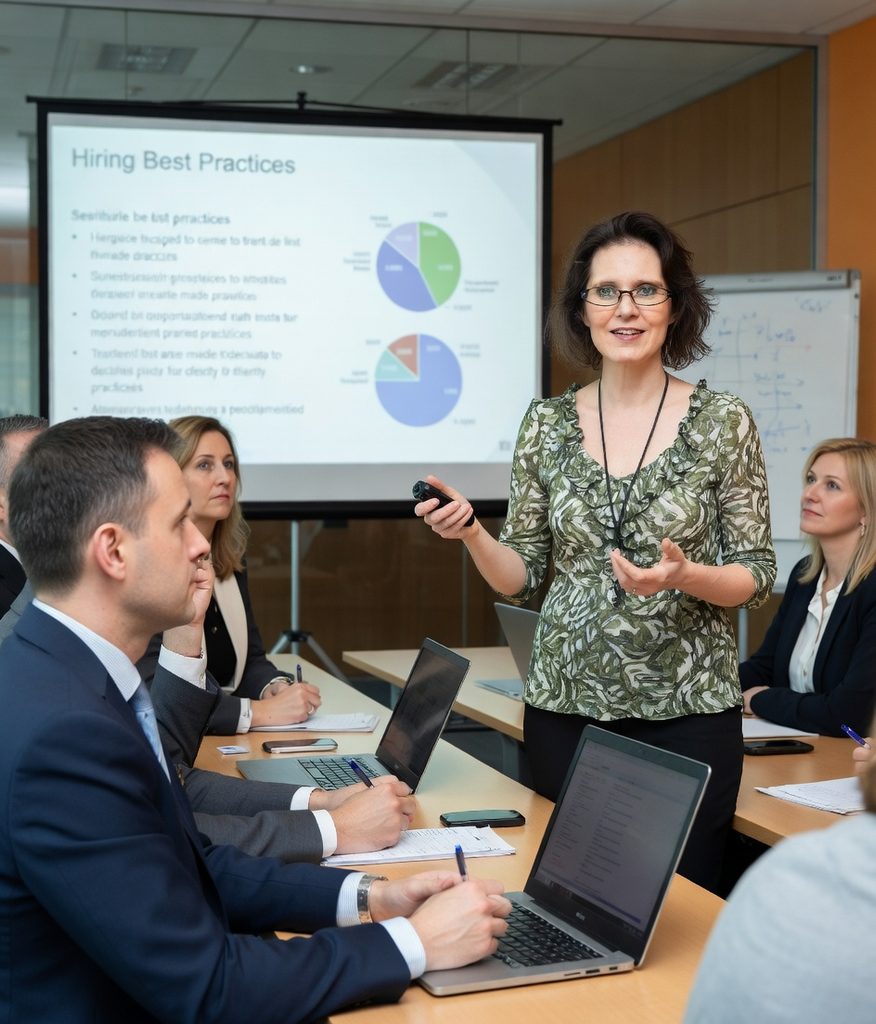
When you run a small business, you often manage recruitment yourself, a key element of Recruitment Training for Small Business. An administrator may help with adverts and CVs, but you still handle interviewing and offers.
Whether you need someone to manage accounts, handle payroll, support customers or help expand production, Recruitment Training for Small Business starts with the role your business actually needs.
Delivered one-to-one or in small groups, we tailor Recruitment Training for Small Business to your business, resources and recruitment challenges.
Plan the hire before advertising
The need for additional help does not always arrive with an agreed budget or a clear job description. When this happens, we begin by acknowledging the uncertainty, gathering initial requirements, and outlining the constraints. This approach helps align expectations and prepares us to move from problem to plan in a structured way.
Moreover, we work through how to turn that need into a practical hiring plan, with steps that translate organisational needs into actionable actions. The plan covers roles, timelines, candidate criteria, and evaluation criteria, ensuring that the recruitment process is purposeful and efficient from the outset.
- Define the responsibilities and results you need from the new employee.
- Decide whether you need an experienced specialist or someone you can develop.
- Identify what must be ready before recruitment begins.
- Build a timetable covering preparation, candidate search, interviews, notice periods and onboarding.
You can start planning before you are ready to hire. The training helps you distinguish early market research from an active recruitment process, so you can prepare without creating expectations you cannot yet meet.
Understand your location, market and budget
A business outside a major city may have a smaller local candidate pool. A growing manufacturer may need skills that are difficult to find nearby. Expansion into another country introduces further questions about where and how to recruit.
Using your situation, we explore how to:
- Compare similar roles by responsibilities and skills, rather than job title alone.
- Research salary expectations in the relevant location and industry.
- Consider the full hiring budget, including recruitment fees, travel, equipment, training and onboarding.
- Assess whether local recruitment, relocation or remote working is suitable for the role.
The aim is to build a realistic plan based on the people you need and the market in which you will compete for them.
Design interviews around your business
Should the first interview be online? When should shortlisted candidates visit your office or factory? Would travelling to meet candidates in a new market be worthwhile?
We develop a process that reflects the role, location and practical demands of the job. This can include initial online interviews, relevant work exercises and a planned visit to meet the team and understand the working environment.
Each stage should answer a clear question about the candidate’s suitability while giving them enough information to assess the opportunity themselves.
Check experience and recognise potential
A well-written CV or confident interview does not provide all the evidence you need.
Through practical scenarios and interview exercises, you learn to explore what candidates have personally delivered, ask useful follow-up questions, and identify claims that need verification.
For younger or less experienced candidates, Recruitment Training for Small Business focuses on evidence of learning, responsibility, and motivation in workplace settings. We also emphasise problem-solving and the support your business can provide to help them grow.
This realistic development plan ensures that needs are addressed methodically, with clear steps, appropriate milestones, and ongoing assessment, so progress is visible to managers and candidates alike, enabling consistent monitoring throughout the process and supporting informed decisions at every stage.
Moreover, it helps prioritise training, measure outcomes, and align growth with business objectives precisely, providing a structured framework that keeps development tightly connected to strategic aims and ensures that improvements can be tracked against defined goals over time, consistently achieved.
Choose and brief a recruitment agency
We explore when an agency could add value, what to ask before appointing one and how to assess whether it understands your business.
This includes discussing relevant market experience, assessment methods, fees, communication and replacement terms.
For roles where the working environment matters, a recruiter’s visit to your business can help them understand the equipment, team, expectations and daily realities. We cover how to turn that understanding into a clearer brief and more relevant candidate recommendations.
Prepare for the first months – and review an unsuccessful hire
Recruitment continues beyond the offer. We work through clear expectations, onboarding and early review points so you can assess progress and provide support.
If a hire does not work out, the training helps you review what happened: the role definition, candidate assessment, expectations or onboarding. Those findings can then inform your next recruitment decision.
Start with a free introductory call
Our first conversation is free of charge. We discuss your business, upcoming hiring needs and the points where recruitment becomes difficult.
From there, I propose focused training delivered one-to-one or in a small group, in person or virtually, using scenarios relevant to your business.
Arrange your free introductory call and discuss the support you need.